 English



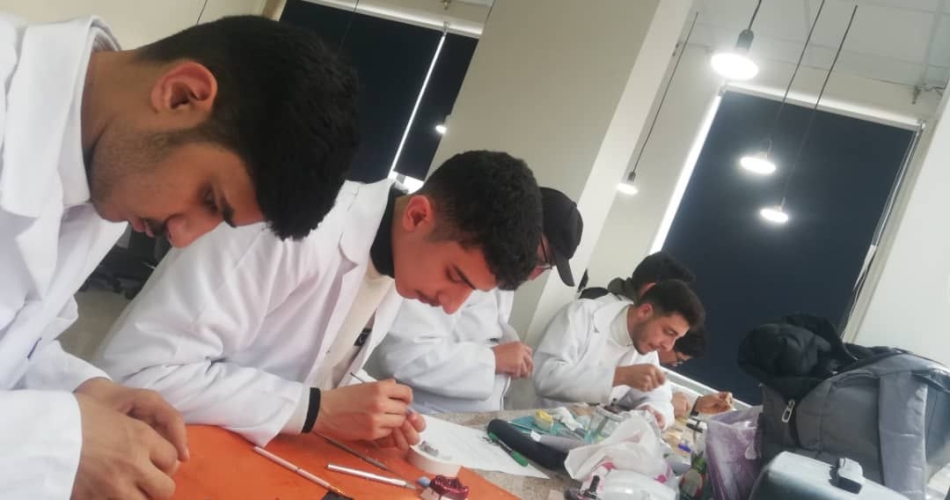


Computer lab
The Computer and Pharmaceutical Informatics Lab at the Faculty of Pharmacy, Qasyoun Private University, is a fundamental requirement for keeping pace with digital advancements in pharmaceutical sciences. It provides an interactive environment for training students in the use of modern technologies, molecular modeling software, drug design, and biostatistical analysis.
Lab Objectives:
Empowering students in pharmaceutical digitalization: Equipping students with the skills to use specialized pharmacy software and search global medical and pharmaceutical databases.
Training in Drug Design (CADD): Using computer-aided drug design (CADD) software to study drug-receptor interactions.
Mastering Biostatistics: Training students in processing practical data and conducting clinical research using advanced statistical packages.
Administrative and Pharmaceutical Simulation: Training in pharmacy management software, electronic prescription dispensing, and drug interaction investigation.
Essential Equipment and Software:
The lab features a comprehensive digital infrastructure, including:
Hardware:
Modern computers with high-speed processors and advanced memory for running 3D modeling software. High-speed internet access for books, journals, and scientific databases.
Interactive display devices (data/show) and screens for step-by-step demonstrations of experiments and software.
Chemistry and pharmaceutical design software (CADD & Chemoinformatics):
Systems for drawing and constructing chemical structures, such as ChemDraw.
Systems for displaying and previewing 3D protein and molecular structures, such as PyMOL, Discovery Studio, and Visualizer.
Simulation and pharmaceutical preparation software (AutoDock) for studying molecular bonding.
Statistical and data analysis software:
Popular statistical software such as SPSS, GraphPad, and Prism for data analysis and generating graphs.
Databases and pharmaceutical systems:
On-the-job training on using digital resources such as DrugBank, PubChem, PubMed, and Micromedex.
Pharmacy and drug inventory management software. Practical Courses and Activities
The lab covers the practical aspects of several core courses in the study plan:
Computer Applications and Pharmaceutical Informatics:
Advanced search techniques in pharmaceutical databases and peer-reviewed scientific journals.
Preparation of scientific reports and research, and formatting bibliographies digitally.
Using pharmacy management software for inventory management and prescription handling.
Pharmaceutical Biostatistics:
Entering and organizing experimental data and applying statistical tests (e.g., t-test, ANOVA).
Analyzing clinical trial results, toxicity, and confidence limits.
Computerized Drug Design (CADD) and Model Chemistry:
Constructing 3D models of pharmaceutical compounds and calculating their stability energies.
Simulating drug-receptor-ligand interactions.
Studying the quantitative relationship between chemical structure and biological activity (QSAR).
Rules of Use and Digital Ethics
Adherence to academic rules for the use of equipment and the network, and a ban on the use of unapproved software. Maintaining the integrity of equipment and ensuring safe movement between trusted scientific databases.
Implementing digital security standards and protecting student and university research and experiment data.