 English



Hematology and Laboratory Diagnosis
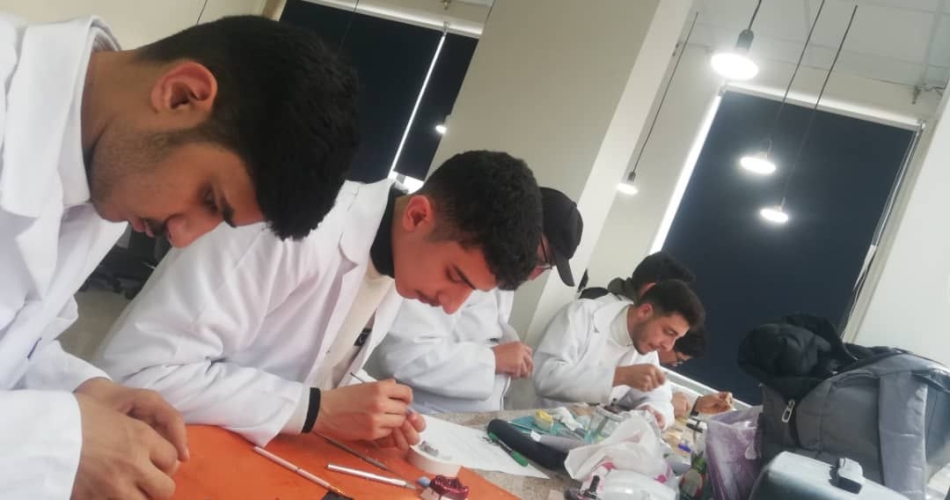
The Hematology & Clinical Diagnosis Lab at the Faculty of Pharmacy, Qasyoun Private University, is a leading specialized applied laboratory. It serves as a direct link between pharmaceutical sciences and clinical medical diagnosis by training students in the analysis of biological samples and blood components for disease diagnosis and drug evaluation.
Laboratory Objectives:
Understanding Hematology and Clinical Diagnosis: Studying the cellular and fluid components of blood and the morphological and physiological changes associated with disease conditions.
Mastering Laboratory Tests: Training students to perform complete blood counts, coagulation tests, and highly accurate analysis of biological fluids.
Linking Results to Pharmaceutical Practice: Developing students' ability to read and interpret medical analyses to monitor the effectiveness of drug therapy or to detect drug side effects and toxicity. Essential Equipment and Supplies
The laboratory is equipped with advanced analytical infrastructure and technologies that mimic modern medical diagnostic and probe laboratories:
Blood Analysis and Counting Equipment:
Automated Hematology Analyzers (CBC).
Coagulometers for measuring PT, PTT, and INR.
Microhematocrits/Centrifuges for bulk hematocrit.
Microscopic and Optical Examination Equipment:
Binocular and Trinocular Microscopes equipped with microscopic cameras for examining blood smears.
ELISA Readers and Microplate Readers for immunological and diagnostic tests.
General Processing and Preparation Equipment:
High-speed, refrigerated centrifuges for isolating serum and plasma.
ESR Readers. Biosafety Cabinets (Class II) for the safe handling of biological samples.
Incubators and water baths with controlled temperature (37°C).
Courses and Practical Activities
The laboratory covers the practical aspects of Hematology and Laboratory and Clinical Diagnosis:
Hematology and Cytological Diagnosis:
Complete Blood Count (CBC) and calculation of MCV, MCH, MCHC.
Preparation, staining, and analysis of blood smears (Giemsa and Wright staining) for the study of white blood cell differential and red blood cell morphology.
Study of various types of anemia and leukemia through microscopic examination.
Determination of blood groups and the major factor (ABO & Rh grouping).
Coagulation and Biological Fluid Tests:
Study of the coagulation cascade and bleeding time and clotting tests (BT, CT, PT, PTT). Erythrocyte sedimentation rate (ESR) measurement.
Urinalysis and stool analysis.
Examination and analysis of other biological fluids (such as synovial fluid and cerebrospinal fluid).
Biosafety and Biosecurity Standards
Due to direct handling of blood and biological fluids, the laboratory adheres to the highest biosafety standards:
Strict compliance with bloodborne infection control protocols (wearing white coats, disposable gloves, and protective eyewear).
Use of sterile, single-use collection instruments and tubes.
Immediate and safe disposal of biological samples, needles, and slides in designated biohazard/safety boxes.