 English



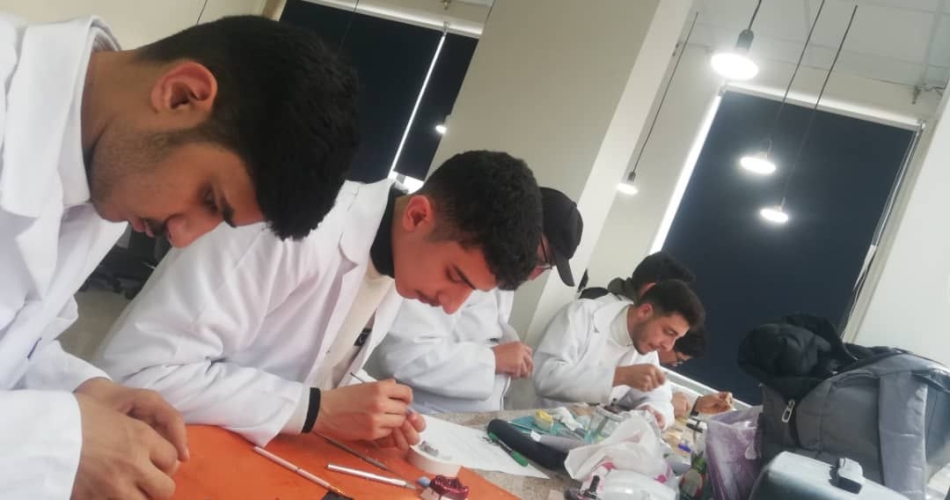


Drug laboratory
The Pharmacognosy & Medicinal Plants Lab at the Faculty of Pharmacy, Qasyoun Private University, is a leading specialized laboratory that bridges nature and the pharmaceutical industry. It focuses on studying natural sources of medicines (plant, animal, and marine), extracting their active ingredients, and characterizing them chemically and pharmacologically.
Laboratory Objectives:
Identification of Raw Drugs: Equipping students with microscopic and macroscopic skills to distinguish medicinal plants and their parts (leaves, flowers, roots, and fruits).
Extraction and Separation Techniques: Training students in methods of drug extraction and the identification of active ingredients (such as essential oils, alkaloids, flavonoids, and glycosides).
Chemical Analysis and Purity: Conducting phytochemical and screening tests, adulteration detection tests, and ensuring the quality of herbal medicines. Essential Equipment and Supplies
The laboratory is equipped with specialized equipment for examining, extracting, and analyzing natural medicines:
Microscopic and Histological Examination Equipment:
Modern optical microscopes with microscopic cameras for examining plant sections and powders.
Instruments for preparing colored microscope slides and pharmaceutical powders.
Extraction and Distillation Equipment:
Clevenger distillers for essential oils.
Soxhlet extractors.
Rotary evaporators for concentrating extracts and recovering solvents.
Chromatographic Detection and Separation Equipment:
Thin-field chromatography (TLC) and UV staining cabinets.
Water baths and magnetic stirrers.
General Examination Equipment: Precision analytical balances, plant sample grinding and cutting equipment, and sample drying ovens. Coursework and Practical Activities
The laboratory covers the practical aspects of the Pharmacognosy (1 & 2) and Pharmacochemistry/Natural Products courses:
General Pharmacognosy and Medicinal Plants:
Anatomical and microscopic study of plant tissues (epidermis, stomata, capillaries, crystals).
Distinguishing between different plant powders and detecting commercial adulteration in raw drugs.
Identifying common medicinal plant species and their constituents.
Pharmacochemistry and Natural Products:
Methods of extracting essential oils and testing their physical and chemical properties.
Separating active ingredients (such as alkaloids, cardiac glycosides, tannins, and flavonoids) using colorimetric reactions and chromatographic applications.
Titrating and testing the purity of plant extracts for use in pharmaceutical and cosmetic formulations.
Safety Standards and Good Laboratory Practice:
Adherence to wearing protective laboratory attire, gloves, and safety goggles. Handle highly flammable organic solvents with care during extraction processes, and use fume hoods.
Take care of microscopic equipment and maintain cleanliness and precision when preparing microscopic specimens.