 English



Chemistry and Pharmacy Laboratory
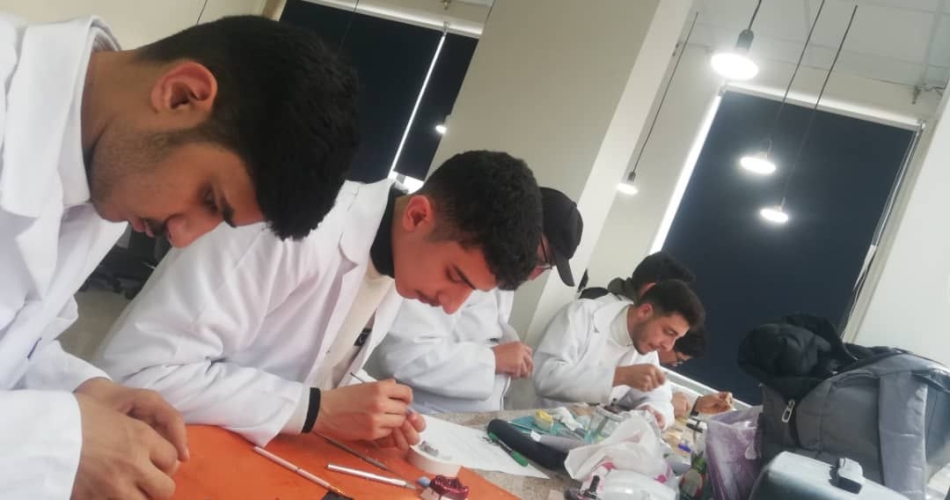
The Chemistry and Pharmacy Laboratory (Chemical and Pharmaceutical Analysis) at the Faculty of Pharmacy, Qasyoun Private University, is a vital center for teaching and applying qualitative and quantitative analytical methods for pharmaceutical and chemical materials, and for testing their conformity to standard pharmacopoeias.
Laboratory Objectives:
Pharmaceutical and Chemical Analysis: Training students in the identification of chemical compounds and determining the concentration of the active ingredient in pharmaceutical preparations.
Quality Control: Applying titration and automated analytical methods approved in pharmacopoeias (USP/BP) to ensure the quality and purity of medicines.
Integrating Chemical and Pharmaceutical Sciences: Equipping students with the skills to relate the chemical structure of a drug to its physical and analytical properties.
Essential Equipment:
The laboratory is equipped with advanced analytical equipment that simulates pharmaceutical control laboratories in research institutions:
Spectrophotometers:
UV-Vis Spectrophotometers.
Photometric spectrometers for measuring absorption and emission. Analytical Separation Equipment (Chromatography):
High-performance liquid chromatography (HPLC) systems for determining the concentration of active ingredients and sample purity.
Thin-layer chromatography (TLC) instruments.
Calibration and Precision Measurement Equipment:
Potentiometric titrators.
High-precision analytical balances (four decimal places).
PH meters and electrical conductivity meters.
Preparation and Safety Equipment:
Ultrasonic baths for dissolving and removing air from solutions.
Fume hoods to ensure a safe environment during sample handling.
Courses and Practical Activities:
The laboratory covers the practical aspects of a range of specialized courses throughout the years of pharmacy study:
Analytical Chemistry (1 & 2):
Qualitative detection of ions and functional groups. Volumetric titrations (acid-base titration, oxidation-reduction titration, precipitation titration, and complex-forming titration).
Pharmaceutical chemistry and pharmaceutical analysis:
Titration of raw pharmaceutical materials and finished products (tablets, capsules, injections).
Study of drug purity and determination of impurities and decomposition products.
Applied spectroscopic and chromatographic methods in the analysis of multi-component drug mixtures.
Laboratory safety and quality standards:
Strict adherence to the use of personal protective equipment (white lab coat, goggles, and gloves).
Documentation of all analytical steps and results according to Good Laboratory Practice (GLP).
Safe handling of standard solutions and organic solvents, and disposal of chemical waste in accordance with environmental and regulatory standards.