 English




Chemistry Lab
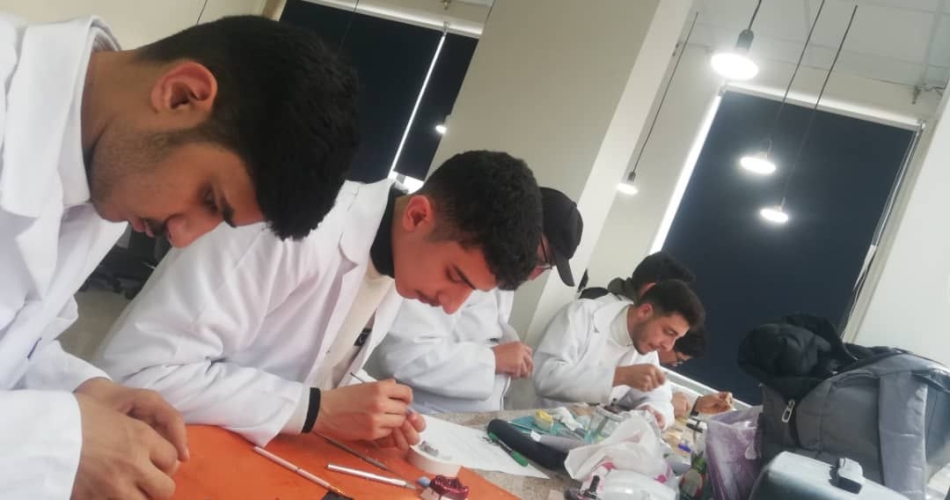
The Chemistry Laboratory at the Faculty of Dentistry, Qasyoun Private University, provides a fundamental scientific and applied framework for chemical sciences (general, organic, and biological), with a particular focus on the chemistry of oral tissues and dental materials used in clinical treatments and restorations.
General Objectives of the Laboratory:
To establish a scientific understanding of chemical reactions: linking theoretical chemical concepts to the physicochemical behavior of oral tissues and dental materials.
To understand the chemistry of the oral environment: studying acid-base balance, the chemical composition of oral fluids, and the mechanisms of calcification and dissolution.
To understand hardening and polymerization reactions: studying the chemical changes that occur in restorative materials and dental cements during their preparation and application.
Laboratory Equipment and Tools:
PH Meters: precise devices for measuring the pH of solutions, saliva, and caries-causing acids.
Spectrophotometers: for analyzing the chemical concentrations of compounds, enzymes, and mineral ions. Centrifuges and Water Baths: For separating sample components and conducting reactions at standardized temperatures.
Titration and Volumetric Analysis Instruments: Burettes, standard flasks, and micropipettes for precise solution preparation.
Fume Hoods: Dedicated ventilation systems for the safe handling of volatile chemicals and concentrated acids.
Student Training Topics and Skills:
General and Analytical Chemistry:
Preparation of aqueous and buffer solutions and understanding their role in resisting acidic changes.
Performing volumetric titrations to determine acid and base concentrations.
Oral Biochemistry:
Analysis of oral fluids: Studying the chemical composition of saliva and secreted oral proteins.
Demineralization and Remineralization: Studying the dynamic balance of calcium ions and phosphates in saliva and their effect on enamel maintenance and caries prevention. Enzymatic Activity: Study of oral enzymes (such as amylase) and their inhibitory and activating factors.
Chemistry of Dental Materials: Study of the curing and polymerization reactions of acrylic resins and composite resins.
Understanding the chemical reactions and biocompatibility of different types of dental cements (such as glass ionomer cements).
Importance of the Laboratory in the Clinical Process:
The chemistry laboratory is a fundamental resource for dentists. It provides a deep understanding of the mechanisms of tooth decay resulting from acid secretion and helps them select appropriate restorative and cementitious materials based on their chemical properties and biocompatibility within the mouth.