 English




Physics Laboratory
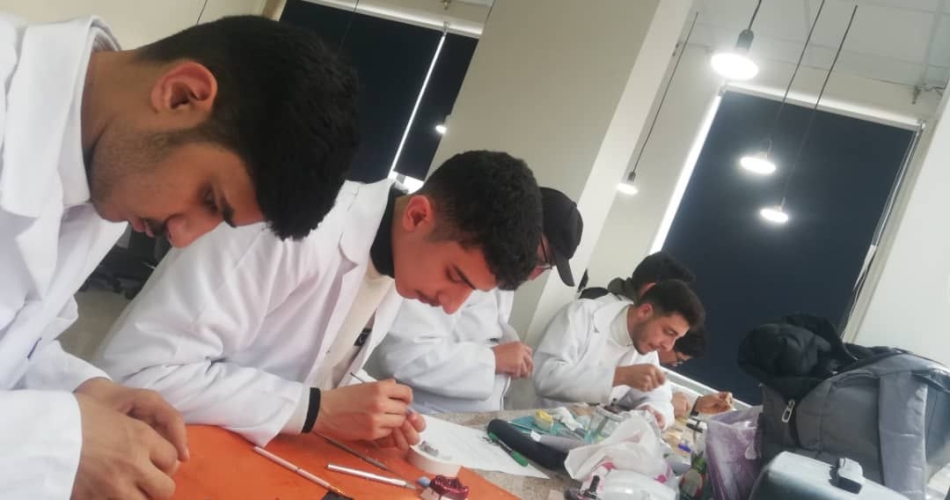
The Medical Physics Laboratory at the Faculty of Dentistry, Qasyoun Private University, offers practical applications and fundamental physical principles that explain and support medical and dental sciences. It connects physical laws with the phenomena of devices used in dental diagnosis and treatment.
General Objectives of the Laboratory:
Understanding the physical principles of medical application: Comprehending the laws of light, sound, radiation, mechanics, and electricity and applying them in the medical field.
Linking physics to dental devices: Understanding the mechanics of operation of radiographic imaging devices, lasers, ultrasound, and drilling and orthodontic instruments.
Developing measurement and precision skills: Training students to handle sensitive measuring devices, analyze physical data and results, and interpret them biologically.
Laboratory Equipment and Tools:
Light and optical devices: Light microscopes, lenses, prisms, and polarimeters for studying refraction, diffraction, and the optical properties of materials.
Audio and ultrasonic equipment: Sound and ultrasonic wave generators for studying propagation, intensity, and wave phenomena used in dental cleaning devices (ultrasonic scalers). Electrical and Thermal Measuring Instruments: Instruments for measuring resistance, electrical conductivity, thermal conductivity of dental materials, and temperature variations.
Mechanical and Particle Mechanics Equipment: Instruments for measuring viscosity, surface tension of fluids, and Young's modulus of elasticity in dental and restorative materials.
Student Training Topics and Skills:
Optics and Lasers in Dentistry:
Study of the laws of refraction and reflection of light and magnifying lenses used in dental clinics (loops).
Study of laser principles and their applications in clinical tissue cutting and curing light.
Radiophysics: Study of the nature of X-rays, tissue absorption, inverse-squared laws, and radiation doses.
Biomechanics and Physical Properties: Measuring surface tension and viscosity of oral fluids (such as saliva) and impression materials.
Study of stress and strain related to occlusal forces on teeth, prostheses, and orthodontic wires. Electricity and Magnetism:
Studying electrical conductivity in living tissues and the principles of vitality testing for dental pulp.
The Importance of the Laboratory in the Medical Career
The medical physics laboratory is an essential and indispensable resource for dentists. It helps them understand the behavior of dental materials under pressure and temperature, comprehend the mechanisms of modern diagnostic and therapeutic equipment, and learn how to control physical factors to ensure patient health and safety.