 English



Physiology Laboratory
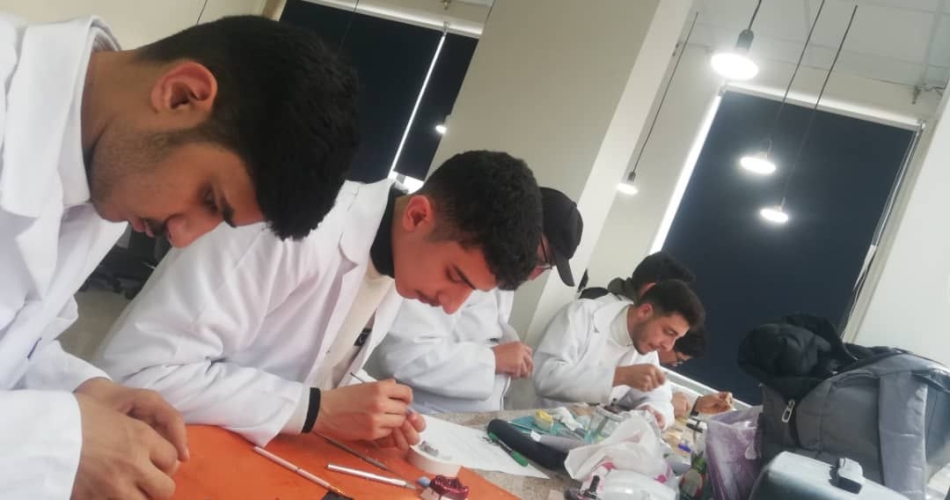
The Physiology Laboratory at the Faculty of Dentistry, Qasyoun Private University, provides a scientific and practical environment that enables students to understand the dynamic principles and vital functions of the human body's systems, with a particular focus on the physiological functions of the head, neck, and occlusal systems.
General Objectives of the Laboratory:
Reinforcing Theoretical Concepts: Connecting theoretical lectures on physiology with concrete scientific experiments and tests.
Understanding Physiological Mechanisms: Studying the function of the basic bodily systems (circulatory, respiratory, nervous, muscular, and circulatory systems).
Linking Physiology to Clinical Medicine: Understanding normal vital signs and how they change in pathological conditions or during dental treatments.
Laboratory Equipment and Tools:
Vital Signs Measurement Devices: Blood pressure monitors (stethoscopes and sphygmomanometers), pulse oximeters, and pulse oximeters.
Basic Hematology Testing Equipment: Centrifuges, clotting and bleeding time slides, and blood typing and hematological analysis equipment. Biodynamic Activity Mapping Equipment: Instruments for measuring and testing cranial nerve reflexes and spinal reflexes.
Microscopic and Histological and Movement Experimental Equipment: Light microscopes and slides prepared for observing functional changes at the cellular and tissue levels.
Student Training Topics and Skills
Hemophysiology and Vascular Systems:
Performing blood typing (ABO & Rh).
Measuring bleeding and clotting time, an essential test before dental procedures and surgeries.
Determining hemoglobin levels and performing a complete blood count.
Vital Signs and Cardiovascular Function:
Measuring arterial blood pressure and recording pulse at rest and during exertion.
Studying the effect of stress and dental anesthetics on vital signs.
Neuromuscular Physiology:
Testing cranial nerve reflexes (related to the facial nerves and trigeminal nerves).
Studying the mechanism of muscle contraction, masticatory muscles, and temporomandibular joint (TMJ) movement. Physiology of Saliva and Salivary Glands:
The study of the components of saliva and its protective and digestive functions, and its role in preventing tooth decay and maintaining oral ecological balance.
The Importance of the Laboratory in the Medical Process
The physiology laboratory is a fundamental pillar for the dentist, enabling them to assess the patient's overall health before any surgical or medical procedure, and to understand the body's response to local anesthesia and various medical interventions.