 English

Gypsum laboratory
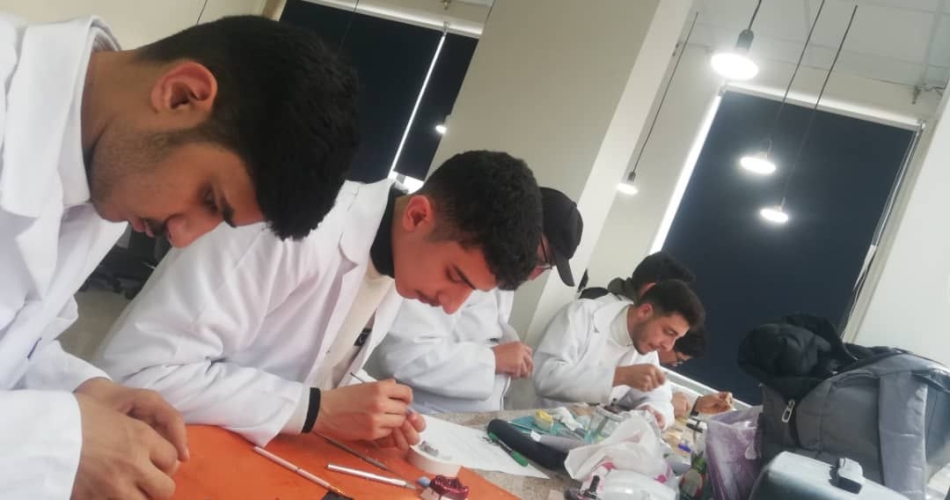
The Plaster Lab at the Institute of Prosthodontics, Qasyoun Private University, provides the first and essential step in the process of fabricating various types of dental prostheses (fixed and removable). This lab focuses on training students in working with plaster materials and pre-casting techniques, transforming dental impressions taken from the patient's mouth into three-dimensional models and models that accurately mimic reality.
General Objectives of the Lab:
Understanding the Properties of Plaster Materials: Introducing students to the physics and chemistry of different types of dental plaster, and the mechanisms of hardening, shrinkage, and thermal expansion.
Mastering Impression Casting: Training students to cast dental impressions without air bubbles to ensure accurate matching of the real-life model.
Preparing Master Casts: Preparing study models and diework models upon which dental prostheses are based.
Available Equipment and Technologies:
Vacuum Mixers: Mechanical devices for mixing plaster under vacuum to minimize bubbles and increase the hardness of the plaster model. Rubber bands and electric vibrators: Devices for removing bubbles and agitating the plaster during casting to ensure the material flows smoothly in the finest details.
Gypsum model trimmers: Water-powered cutting and trimming devices for finishing and framing plaster models.
Precision scales and measuring instruments: Instruments for accurately weighing plaster and measuring water to ensure adherence to the manufacturer's recommended proportions.
Pindex system/saw frame: Equipment for dividing the model into separate, removable dies.
Training topics and skills:
Working with different types of plaster:
Plain plaster (Type II): For study models and preliminary studies.
Stone plaster (Type III): For removable prosthesis models and bases.
Die stone plaster (Type IV/V): For precise work models in fixed prostheses and bridges. Pouring and Mixing Impressions: Applying the precise water/powder ratio and mixing the impression with gypsum on the vibrator to ensure surface quality.
Model Trimming: Giving gypsum bases standard shapes that facilitate placement on the occlusion and aid in studying the occlusal relationship.
Die Preparation: Applying pins and cutting the gypsum model to isolate the prepared tooth and seal the edges to facilitate subsequent waxing.
Safety and Hygiene Standards
Water Filtration Systems (Gypsum Traps): Preventing clogging of the drainage system with gypsum residue during trimming and instrument washing.
Personal Protection: Wearing masks and safety goggles to prevent inhalation of dry gypsum dust or eye contact during trimming.
Equipment Maintenance and Cleaning: Regularly cleaning vibrators and mixing equipment to ensure that old and new gypsum are not mixed.