 English

Casting laboratory
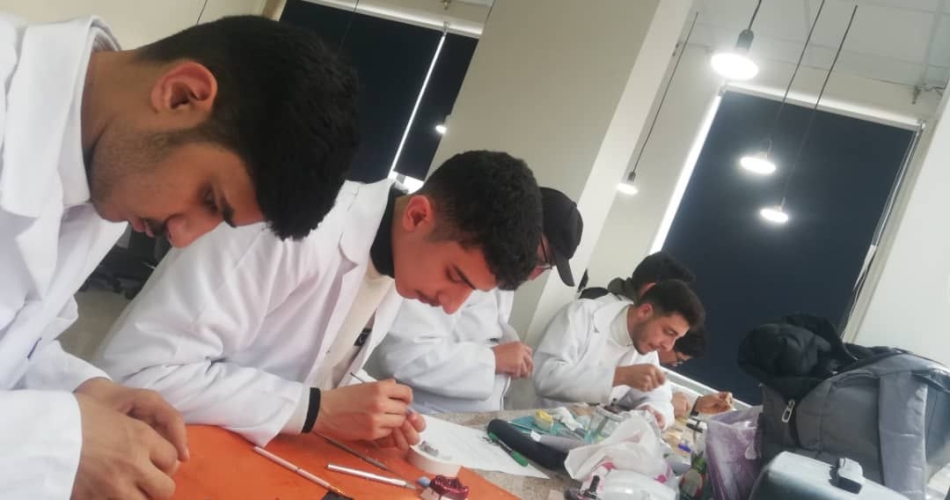
The Casting Laboratory at the Institute of Dental Prosthetics, Qasyoun Private University, provides a specialized practical training environment for students on one of the most fundamental aspects of producing fixed and removable dental prostheses: the process of converting wax patterns into highly precise, solid metal structures.
General Objectives of the Laboratory:
Understanding Casting and Heat Techniques: Training students to work with dental metals and alloys, understanding their physical properties and behavior during melting.
Mastering the Casting Techniques: Teaching students the stages of sealing, heating, and casting, culminating in the extraction of the metal structure.
Minimizing Casting Defects: Training students on how to avoid voids, incomplete filling, or thermal shrinkage during the casting process.
Available Equipment and Technologies:
Burnout Furnaces: High-temperature, graduated furnaces for evaporating wax and preparing the molds (sealing) to receive the molten metal.
Casting Machines: Centrifugal or vacuum pressure casting machines for controlling the flow of metal and ensuring complete mold filling. Melting Torches/Induction Units: High-temperature devices for melting metal alloys for dental applications.
Casting Rings & Sprue Formers: Equipment for fixing and preparing wax channels within the casting tubes.
Sandblasters: Jet devices for removing residual sealant and performing initial cleaning of the cast metal structure.
Training Topics and Skills
Sprueing: Fixing wax channels in patterns designed to ensure smooth, swirling flow of molten metal.
Investing: Mixing and using heat-resistant sealants in precise proportions to coat the wax patterns and remove air.
Burnout: Placing the molds in furnaces according to a specific heat program to completely melt and vaporize the wax without leaving any residue.
Casting Execution: Melting the metal alloy at the appropriate temperature and precisely guiding it into the mold. De-vesting and Sandblasting: Removing the metal structure and cleaning it of any remaining die residue by sandblasting in preparation for the smoothing and polishing stage.
Occupational Safety Standards
High Personal Protective Equipment: Wearing protective eyewear against radiation and heat, thick heat-resistant gloves, and a dust mask is mandatory.
Ventilation and Safety Measures: Working in an area equipped with ventilation systems and having access to fire extinguishers and safety equipment specifically designed for handling furnaces and direct flames.