 English

Fixed Prosthetics Laboratory
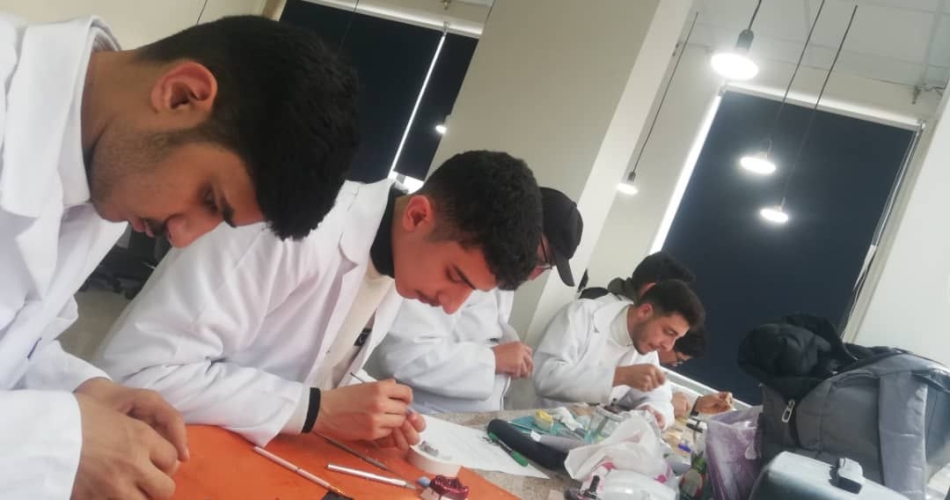
The Fixed Prosthodontics Laboratory at the Institute of Dental Prosthodontics, Qasyoun Private University, provides a well-equipped educational and practical environment for training students in the fundamental concepts and advanced skills required for the production and fabrication of various types of fixed dental prostheses. This ensures the development of highly qualified technical and laboratory personnel.
General Objectives of the Laboratory:
Bridging the gap between theoretical science and practical skills: Applying the physical and chemical concepts of dental materials practically in the manufacturing process.
Mastering the Stages of Laboratory Production: Training students in the sequence of laboratory work, from casting models to the delivery of the final prosthesis.
Functional and Aesthetic Accuracy: Emphasizing proper occlusion, precise margins, and morphological conformity to natural teeth.
Essential Equipment and Technologies:
Articulators: Devices that simulate jaw movement to accurately adjust occlusion and jaw relations.
Waxing Stations: Devices for heating and shaping wax used to carve frameworks and axles.
Casting Machines: Equipment for melting and casting metal alloys used in metal and ceramic-metal prostheses. Burnout Furnaces: For melting wax and preparing molds for metal casting.
Micromotors & Trimmers: Special tools and blades for trimming and polishing metals and various dental materials.
Training Topics and Skills
Die Preparation: Producing accurate working models, edging edges, and preparing prepared dental models.
Waxing and Waxing: Building and shaping wax structures for crowns and bridges according to correct morphological contours.
Investing and Casting: Encasing wax models in Investing materials and performing the melting and casting of dental metals.
Finishing and Fitting: Finishing metal structures, adjusting their fit to plaster models, and preparing them for porcelain or final veneer application.
Quality and Safety Standards
Adherence to occupational safety procedures: Using dust extraction systems and wearing protective eyewear and masks during casting and smoothing operations. Quality and Dimensional Control: Monitoring edge accuracy and precise fit to minimize any leakage or occlusal defects in completed prostheses.